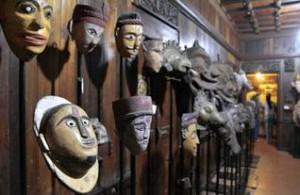
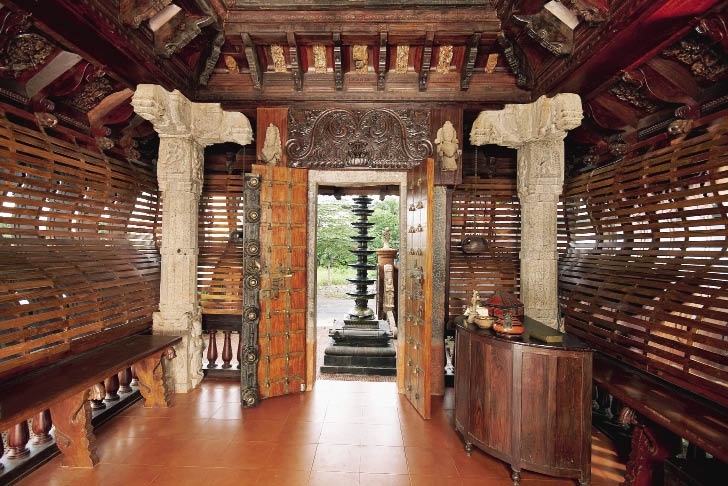
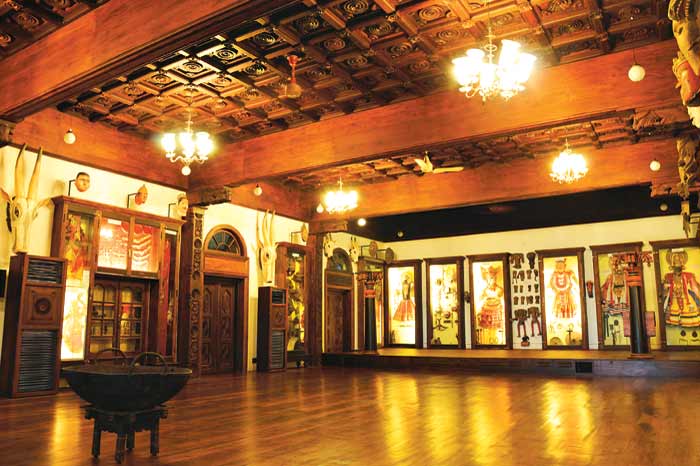
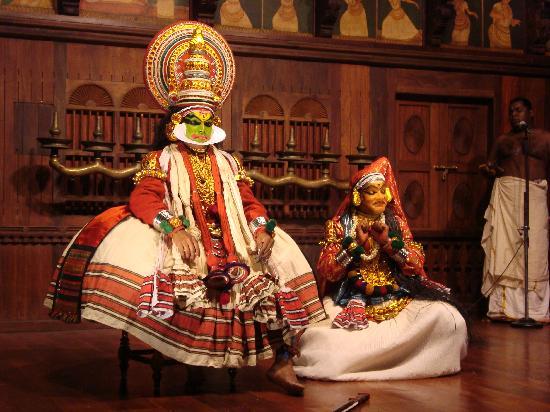
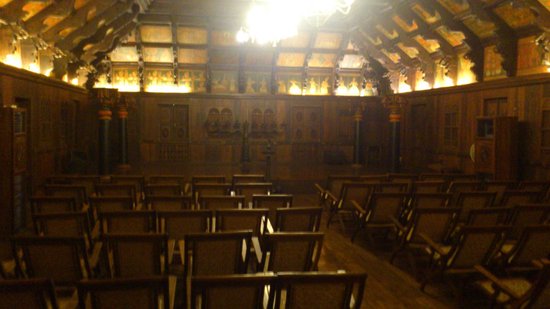
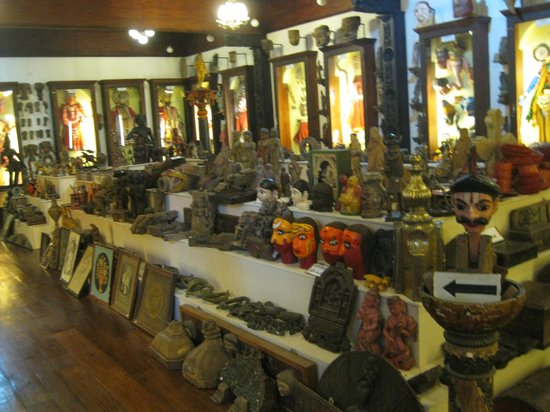
Inside of Kerala Folklore Museum, Cochin.
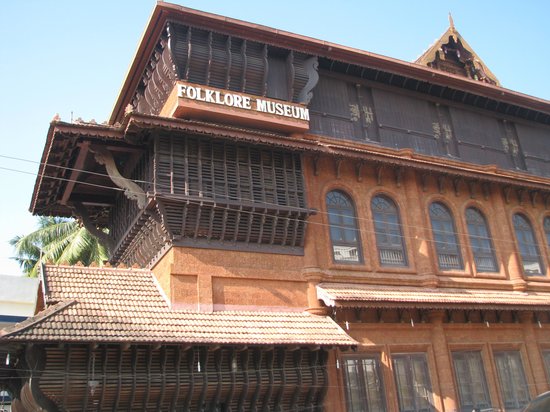
“Kerala Folklore Theatre and Museum in Thevara, Cochin is Remarkable”
This fantastic museum is the collection of one man! It took over 10 years to construct and was open to public on 2008. If you want to know the history of Kerala, visit Folklore Museum. Wonderful collection of historical artifacts and paintings. And you will visit again for sure.
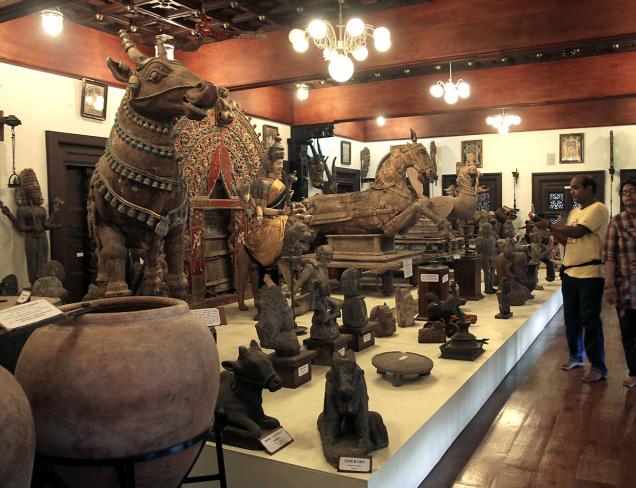
Kerala Folklore Theatre and Museum is the outcome of 30 years of efforts and determination of George Thaliath and his wife Annie George along with the inimitable craftsmanship and manpower put in by 62 carpenters and skilled workers for around ten years.
Over 5000 objects all carefully catalogued and researched. A fine museum and definitely worth a visit. Ancient stone carving, incredible ceilings, wooden sculptures, antiques way back from 10000 BC. This is a non profit organization and is maintained just by the entry fee of Rs.100 to Rs.200 per person.
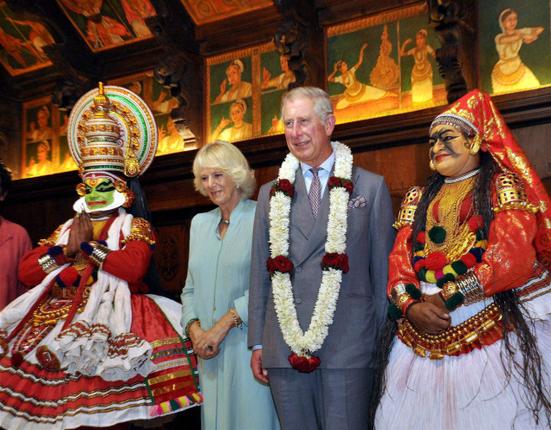
Prince Charles visited this museum as soon as he landed, directly from the Cochin International Airport, without even going to his hotel!
The theatre here conducts authentic stage performances every day at 6.30 P.M. The museum is open from 9.30 A.M. to 7.00 P.M. From Fort Cochin, you can hire a tuk-tuk and be here in 20 minutes.
Phone: + 91 484 2665452
Email: keralafolkloretheatre@gmail.com
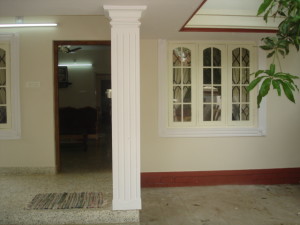
 Homestays in Fort Cochin, enables you to experience the traditional Kerala food and hospitality, exchange of culture, understand the practices of the people and their way of life in this tiny town, hundreds of Home Stays and a few private villas have opened their doors to guests in Fort Cochin.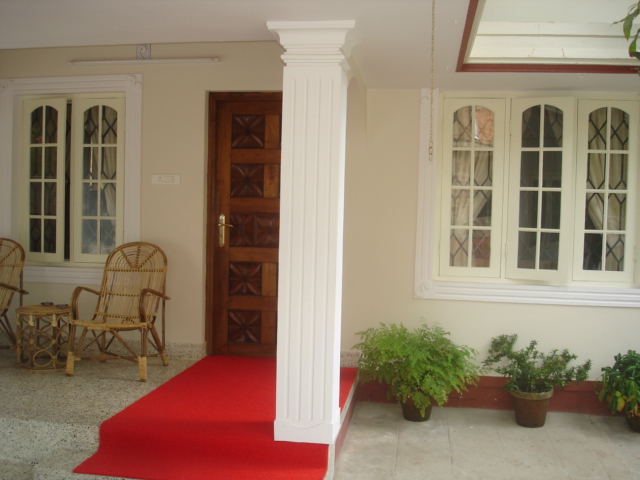
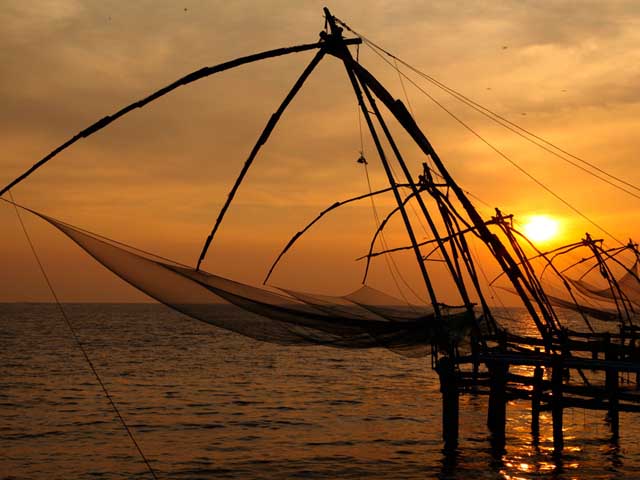 Chinese Fishing Nets & Vasco Da Gama Square: A vivid legacy of one of the earliest people to call on the Malabar Coast, these nets is unmistakable as one enters the harbour.
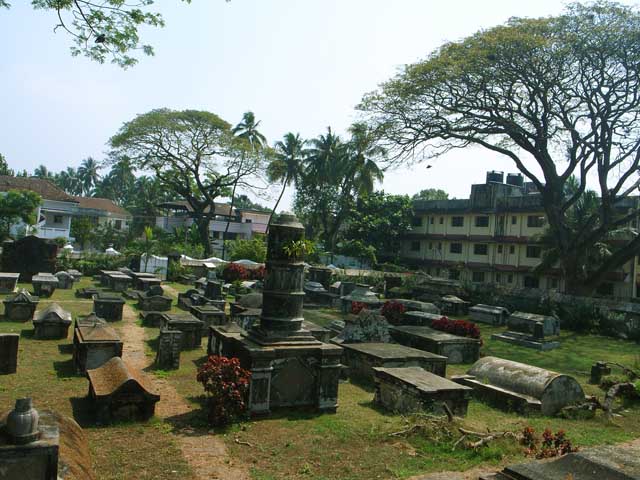 The Dutch Cemetery: It is the oldest European cemetery in India. Consecrated in 1724, the cemetery has 104 tombs. It is now being looked after by St. Francis CSI Church, Fort Cochin.
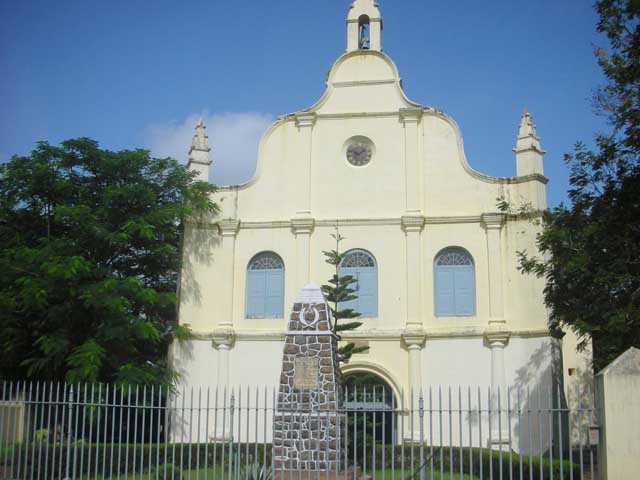 St Francis Church: St. Francis Church was originally named as Santo Antonio. It is the first church to have been built in the new European influenced style and tradition. The original wooden building of 1510 was soon replaced by the present building around 1546.
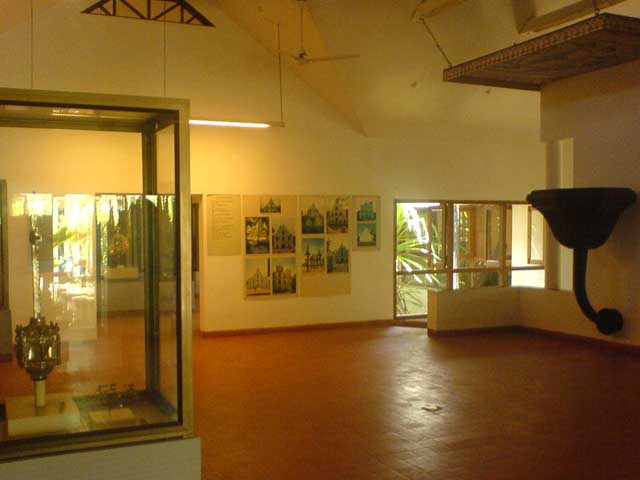 Indo-Portuguese Museum – Bishop’s House: The museum was established by the efforts of the late Dr. Joseph Kureethra, Bishop of Cochin.
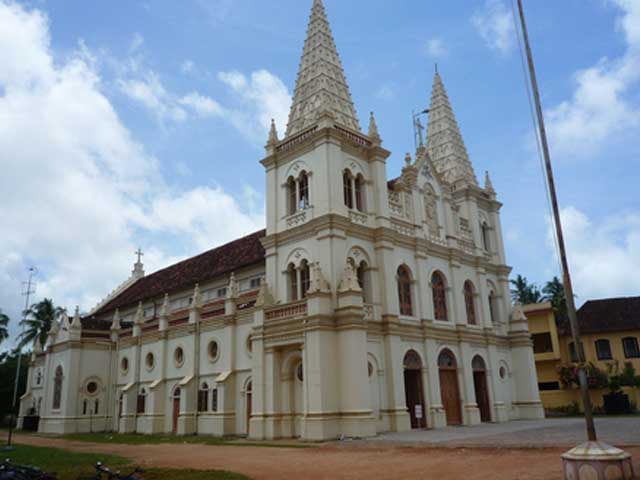 Santa Cruz Basilica: Santa Cruz was used as an armory during the Dutch occupation in the 17th century, and later destroyed by the British in the 18th century.
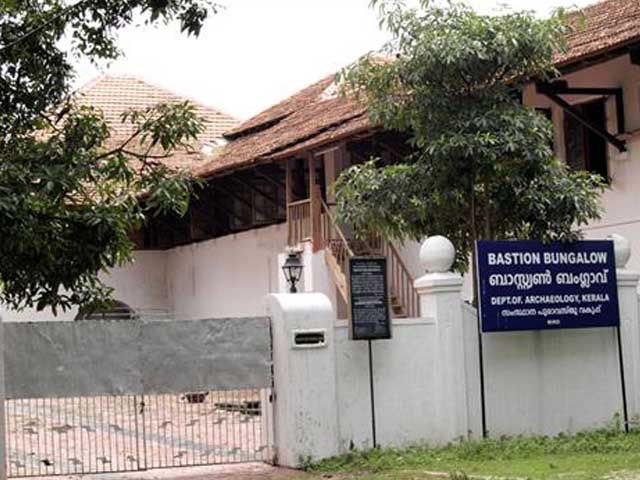 Bastion Bungalow: The Fort Cochin Heritage Development Society held preliminary discussions in this regard at its sitting in December. The estimate for these projects will be prepared at the next meeting of the society. “Apart from beautification of Jew Street, a pay-and-use toilet will be constructed in the area.
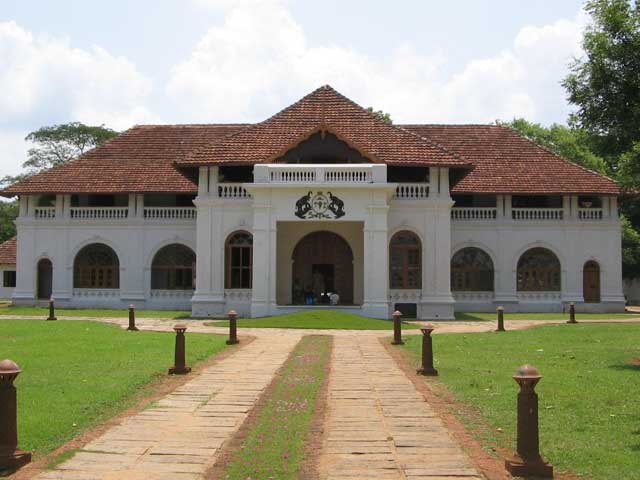 Dutch Palace, Mattancherry: Mattancherry Palace with its medieval charm is situated at Palace Road, Mattancherry, Cochin. It was built by the Portuguese and presented to Veera Kerala Varma (1537-65), Raja of Cochin, in 1555 AD. The Dutch carried out some extensions and renovations in the palace in 1663, and thereafter it was popularly called Dutch Palace. The Rajas also made more improvements to it.
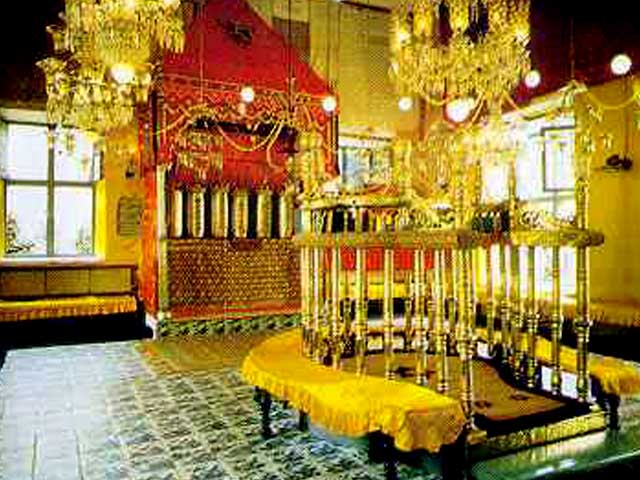 Jewish Synagogue, Mattancherry: The Malabari Jews formed a prosperous trading community of Kerala, and they controlled a major portion of world wide spice trade. In 1568, the Jews of Kerala constructed the Paradesi Synagogue adjacent to Mattancherry Palace, Cochin, now part of the Indian city of Ernakulam, on land given to them by Paraja, the Raja of Cochin.
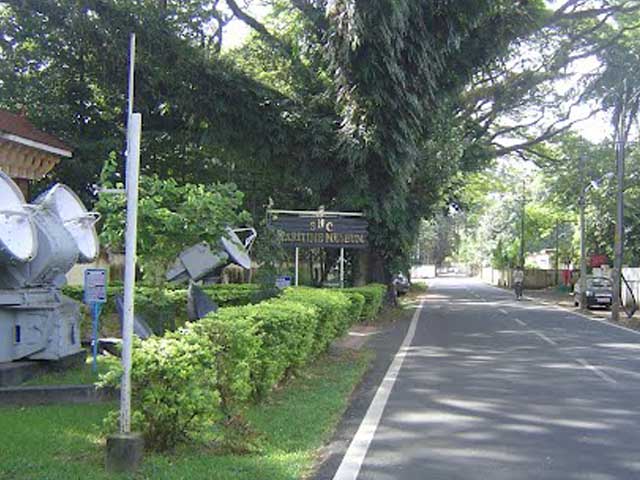 Maritime Museum: Amidst the barbwire topped naval buildings you will find the Maritime Museum. The museum is housed in two war time bunkers (magazines) the British used during the last world war.